
Bucatini all'Amatriciana
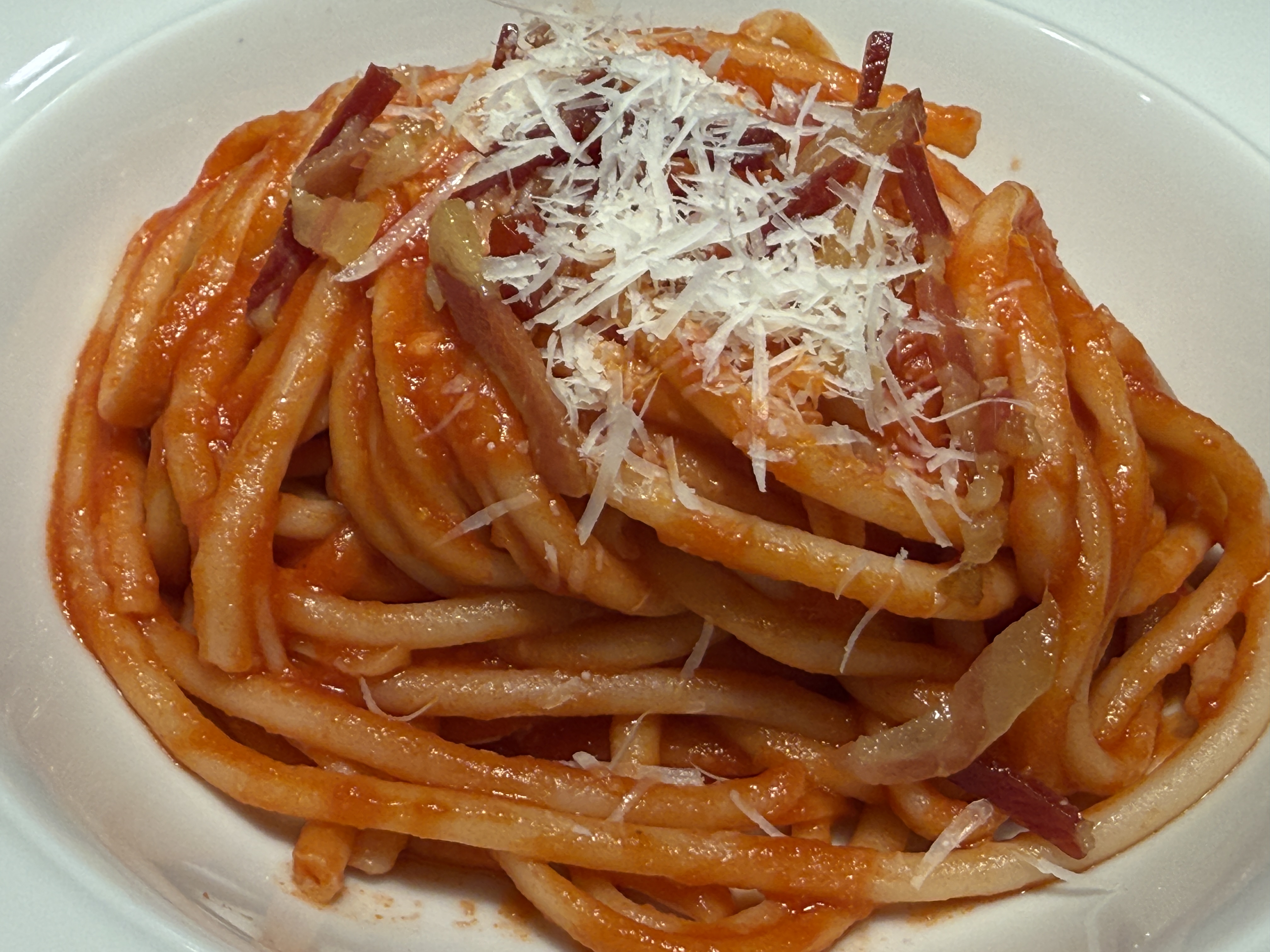
A classic Roman pasta with crisp guanciale, passata, Pecorino Romano, and just enough pasta water to create a glossy, rich tomato sauce.
Directions
1. Bring the Water to a Boil
Bring a large pot of generously salted water to a boil.
2. Render the Guanciale or Pancetta
Add the guanciale or pancetta to a cold saucier and set over medium heat. Cook slowly until the fat has rendered and the meat is crisp. Remove with a slotted spoon and set aside, leaving the rendered fat in the saucier. Don't rush this step—the fat needs time to render. Too much heat will burn the meat before enough fat has been released.
3. Cook the Bucatini
Once the pancetta has been removed from the saucier, add the bucatini to the boiling salted water. Cook until just shy of al dente. Before draining, reserve some of the pasta cooking water.
4. Build the Sauce
Add the passata to the rendered fat, followed by the red pepper flakes, if using. Using a spatula, pull the rendered fat from around the edges of the saucier into the passata, stirring until it is fully incorporated. Bring the sauce to a gentle simmer.
5. Finish the Bucatini in the Sauce
Using tongs, transfer the bucatini directly from the pasta water to the saucier with the sauce. Toss well to coat, then cook over low heat for 2–3 minutes, allowing the pasta to finish cooking and absorb some of the sauce.
6. Return the Pancetta
Add the reserved pancetta back to the saucier, reserving a small amount for garnish. Toss with the bucatini until evenly distributed.
7. Add the Pecorino
Remove the saucier from the heat before adding the Pecorino Romano. This is important—the residual heat is enough to melt the cheese into the sauce. If the saucier is too hot, the cheese can clump or stick to the saucier instead of coating the pasta. Add the Pecorino and toss vigorously, adding reserved pasta water a little at a time as needed, until the sauce is smooth and clings to the bucatini.
8. Finish and Serve
Give the bucatini a final toss, adding a small amount of reserved pasta water if needed to keep the sauce loose and glossy. Plate immediately and finish with the reserved pancetta and additional Pecorino Romano.
Notes
Passata makes a smooth, quick tomato sauce that coats the pasta beautifully. Mutti passata works particularly well here.
Add reserved pasta water a little at a time at the end. Use just enough to help the Pecorino Romano emulsify into the sauce and give it a glossy finish without thinning the tomato sauce.
Paul's Tips
Bucatini is the featured pasta for this recipe, but Amatriciana also works beautifully with Mezzi Rigatoni. Other sturdy pasta shapes that hold the sauce well can also be substituted.
Guanciale is traditional and gives Amatriciana its characteristic richness, but good pancetta works very well and is often much easier to find.