
Soft Dinner Rolls
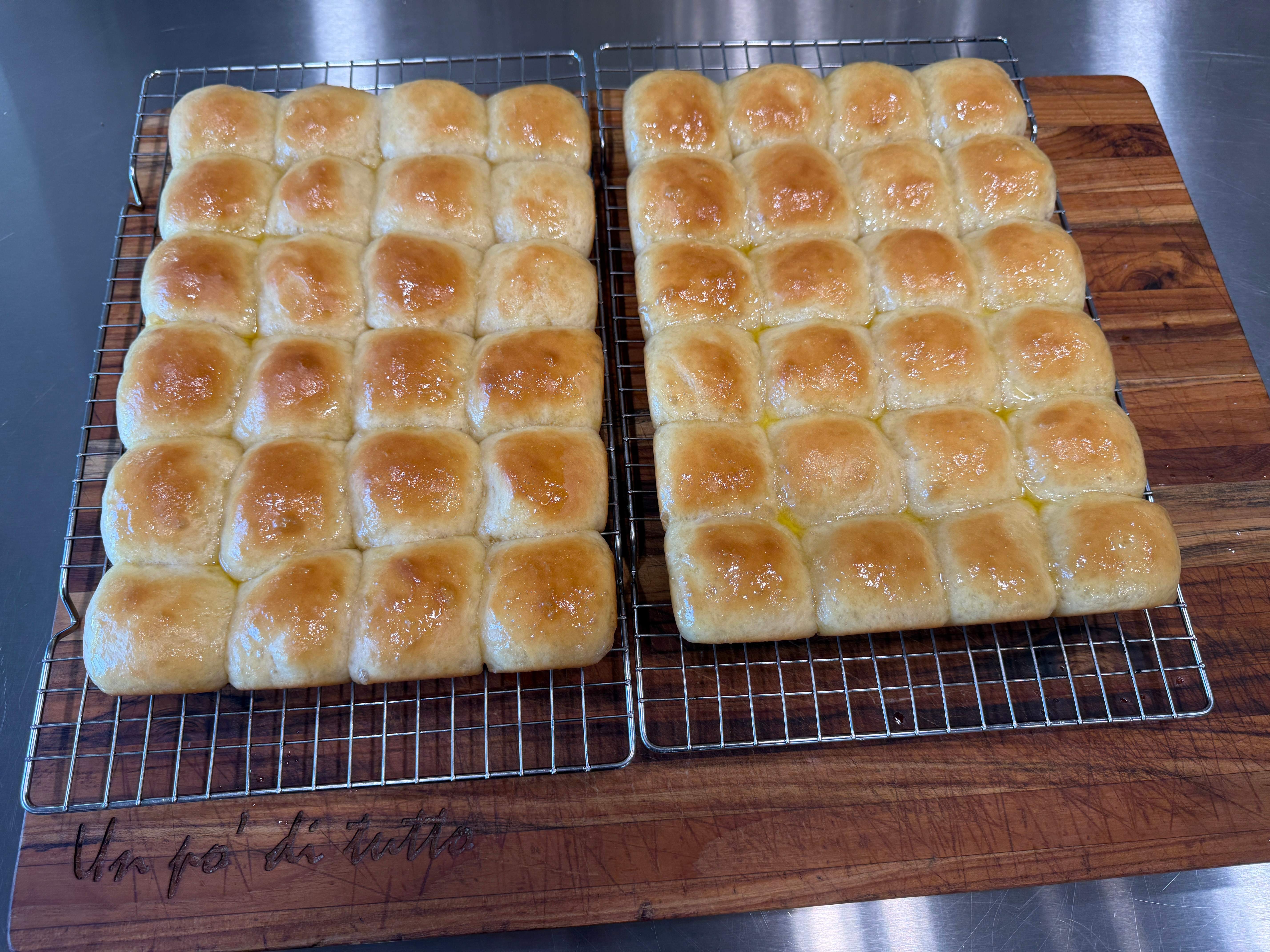
These feather-light dinner rolls stay soft for days thanks to a traditional tangzhong starter. They're the perfect companion for holiday dinners, Sunday suppers, or simply warm from the oven with butter.
Directions
1. Prepare the Tangzhong
Whisk the bread flour and water together in a microwave-safe bowl until completely smooth. Microwave in 30-second intervals, whisking thoroughly after each interval, until the mixture thickens to the consistency of pudding.
Allow the tangzhong to cool for a few minutes before moving on to the next step.
2. Combine the Ingredients
Add the cooled tangzhong, cold milk, eggs, bread flour, yeast, sugar, and salt to the bowl of a stand mixer fitted with the dough hook.
Mix on low speed until all of the flour is moistened and a rough dough forms.
3. Knead the Dough
Add the softened butter a little at a time while the mixer is running on low speed. Once all of the butter has been incorporated, continue kneading for about 8 to 10 minutes.
The finished dough should be soft and slightly tacky, but not sticky. It should stretch easily without tearing.
Resist the temptation to add extra flour. This dough is intentionally soft, which is what gives the finished rolls their light, tender texture.
4. First Rise
Lightly cover the mixing bowl with plastic wrap or a damp towel and place it in a warm, draft-free location.
Allow the dough to rise for about 60 to 90 minutes, or until it has doubled in size.
5. Check the First Rise
Gently uncover the dough. It should have nearly doubled in size and feel light and airy. Press a floured fingertip lightly into the dough. If the indentation slowly springs back, it's ready to shape.
Rising times are only estimates. Let the dough tell you when it's ready rather than watching the clock.
6. Divide the Dough
Turn the dough onto a lightly floured work surface and gently press out the largest air bubbles. Divide the dough into equal portions using a bench scraper and weigh each piece for consistent results.
Keep the portions loosely covered while you work to prevent the surface from drying out.
7. Shape the Rolls
Working with one piece of dough at a time, gather the edges toward the center, then turn the dough seam-side down. Cup your hand lightly around the dough and rotate it against the countertop until a smooth ball forms.
Avoid adding excess flour while shaping. A little friction against the countertop is what creates the smooth outer surface.
8. Arrange for the Final Rise
Arrange the shaped dough balls evenly in a lightly greased 9 × 13-inch baking pan. Cover loosely with plastic wrap or a clean kitchen towel.
Allow the rolls to rise until noticeably puffy and nearly doubled in size. They should be just beginning to touch one another.
9. Complete the Final Rise
Allow the rolls to rise for 45 to 60 minutes, or until they have nearly doubled in size. They should feel light and spring back slowly when gently touched.
While the rolls are finishing their final rise, preheat your oven to 350°F (175°C).
10. Bake Until Golden Brown
Bake for 20 to 25 minutes, rotating the pan halfway through baking if necessary for even browning.
The rolls are done when the tops are deep golden brown and the internal temperature reaches approximately 190°F.
Don't underbake enriched doughs. A rich golden color adds flavor and ensures the centers are fully baked.
11. Brush with Butter
Remove the rolls from the oven and immediately brush the tops generously with melted butter while they are still hot.
Allow the rolls to cool in the pan for about 10 minutes before serving.
12. Serve and Enjoy
Serve warm with butter, or allow the rolls to cool completely before storing them in an airtight container for up to three days.
Leftover rolls freeze exceptionally well. Simply thaw at room temperature and warm for a few minutes before serving.
These rolls make incredible slider buns the next day. Slice them in half, toast lightly, and fill with your favorite sandwich ingredients.
Notes
Bread flour gives these rolls their signature chewy yet tender texture. All-purpose flour can be substituted, but the rolls won't be quite as light.
Rising times vary depending on the temperature of your kitchen. Judge the dough by its size rather than the clock.
For the most consistent results, weigh your ingredients instead of measuring by volume whenever possible.
The tangzhong can be prepared several hours ahead of time. Let it cool completely before mixing the dough.
Paul's Tips
The shaping technique is everything. Stretch the top of each roll smooth and tuck the seam underneath. That tension gives the rolls a better rise and a prettier finished top.