
Mezzi Rigatoni alla Carbonara
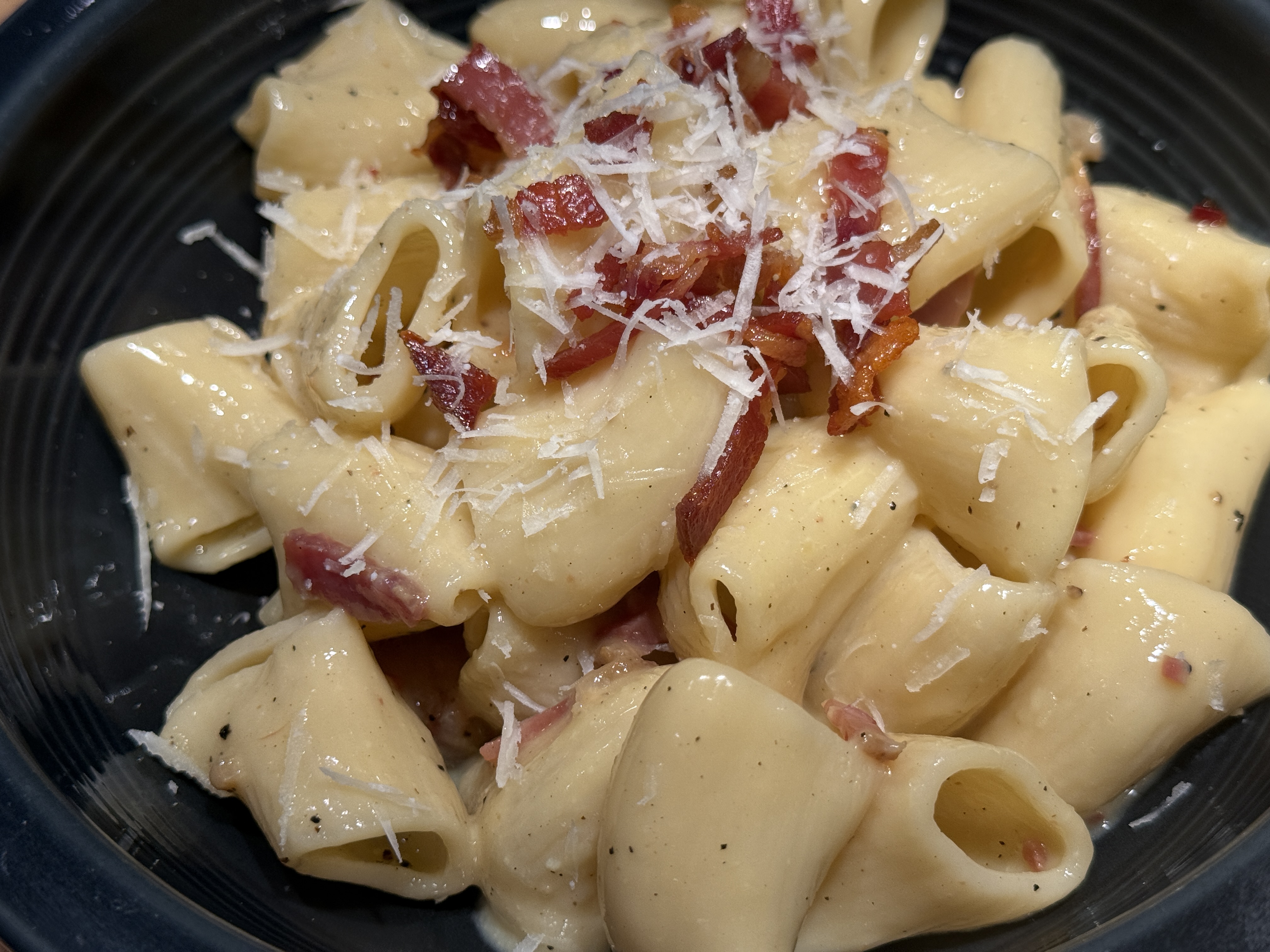
One of Rome's four classic pastas, Carbonara turns eggs, Pecorino Romano, guanciale and pasta water into a rich, creamy sauce—without a drop of cream.
Directions
1. Prepare the Guanciale or Pancetta
Cut the guanciale or pancetta into small matchstick-size pieces.
2. Render the Guanciale or Pancetta
Place the guanciale or pancetta in a large sauté pan over medium-low to medium heat. Cook, stirring occasionally, until browned and crisp and the fat has rendered. Remove the crisp meat and set aside, reserving the rendered fat.
3. Boil the Pasta Water
Bring a large pot of moderately salted water to a boil.
4. Make the Carbonara Base
In a large mixing bowl, whisk together the whole eggs, egg yolks, Pecorino Romano and a generous amount of coarsely ground black pepper. Whisk until thoroughly combined. The mixture should have roughly the consistency of runny mashed potatoes.
5. Cook the Mezzi Rigatoni
Cook the Mezzi Rigatoni until just al dente.
6. Add the Rendered Fat
Allow the rendered guanciale or pancetta fat to cool slightly, then whisk it into the egg and cheese mixture. The fat should be warm, but not hot enough to cook the eggs.
7. Reserve the Pasta Water
Before draining the pasta, reserve about 2 cups of the cooking water. Drain the Mezzi Rigatoni.
8. Temper the Eggs
While whisking constantly, slowly drizzle about 1/4 cup of the hot pasta water into the egg mixture. Add a little more as needed until the mixture is smooth and pourable.
9. Finish the Carbonara
Return the hot Mezzi Rigatoni to the sauté pan with the heat off. Add the egg mixture and toss vigorously until the pasta is evenly coated and the sauce becomes glossy and creamy. Add reserved pasta water a little at a time as needed to loosen the sauce.
10. Serve
Fold in some of the crisp guanciale or pancetta. Serve immediately, topped with the remaining guanciale or pancetta, additional Pecorino Romano and freshly ground black pepper.
Notes
Many Italian pasta dishes rely on remarkably few ingredients, and Carbonara is a perfect example. Traditional Carbonara is made with pasta, guanciale, eggs, Pecorino Romano and black pepper. No cream, garlic or onion is needed—the creamy sauce comes from the eggs, cheese, rendered pork fat and pasta water.
Carbonara is one of Rome's four iconic pasta dishes, along with Cacio e Pepe, Gricia and Amatriciana. Each demonstrates a defining characteristic of Italian cooking: a small number of good ingredients combined with careful technique.
Carbonara has a reputation for being tricky, but once you understand the technique it is remarkably quick to make. From start to finish, you can have dinner on the table in about 25 to 30 minutes.
Paul's Tips
Guanciale is the traditional Roman choice and gives Carbonara its distinctive richness. Pancetta works very well when guanciale is difficult to find, although a Roman might have something to say about the substitution.
Pecorino Romano is a sharp, salty sheep's-milk cheese—pecora means sheep in Italian. Parmigiano Reggiano is made from cow's milk and has a sweeter, nuttier character. For traditional Roman Carbonara, use Pecorino Romano.