
Pasta al Forno
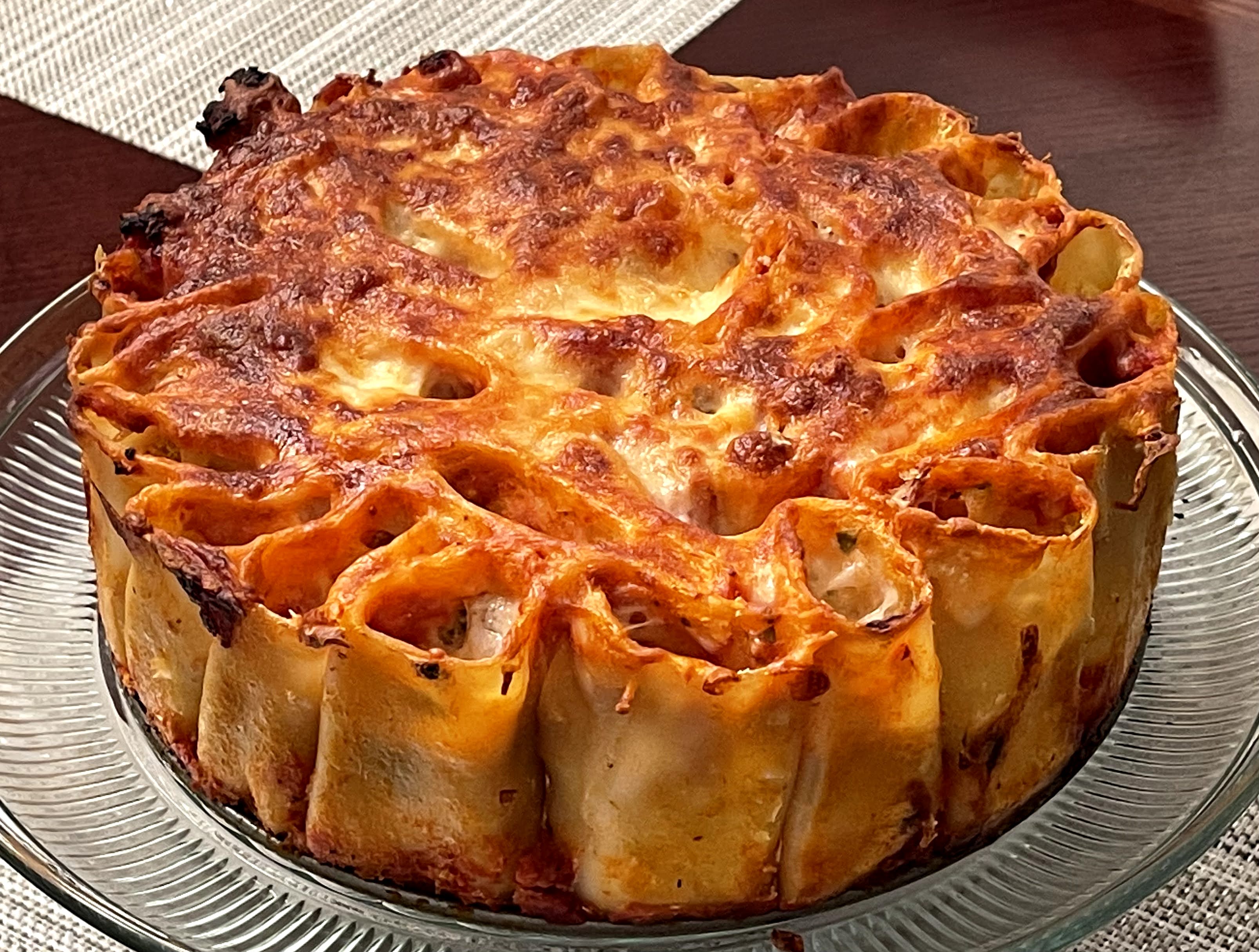
Large paccheri tubes filled with ricotta, mozzarella, Parmigiano Reggiano, and parsley, packed upright in a springform pan and baked in Sunday sauce until bubbling and golden.
Directions
1. Make the Filling
In a large bowl, combine the ricotta, 4 ounces of the shredded mozzarella, 2 ounces of the Parmigiano Reggiano, parsley, salt, and pepper. If using Italian sausage, add the cooked and crumbled sausage now. Mix using a rubber spatula—or, if you were in my grandmother's kitchen, your hand—until everything is evenly incorporated. Taste and adjust the seasoning as needed. Once you're happy with the flavor, add the eggs and mix until fully incorporated.
2. Cook the Paccheri
Bring a large pot of generously salted water to a boil. Add the paccheri and cook until well short of al dente—the pasta should still be quite firm. This isn't just because the paccheri will continue cooking in the oven; keeping them firm makes them much easier to stuff. Paccheri become increasingly fragile as they cook and are much more likely to split or crack when handled. Drain carefully.
3. Coat and Cool the Paccheri
Transfer the drained paccheri to a large bowl and add enough Mutti passata to lightly coat the pasta. Toss gently until each piece is coated. This keeps the paccheri from sticking together as they sit and helps cool them enough to handle for stuffing.
4. Stuff the Paccheri
Once the paccheri are cool enough to handle, fill each one with the ricotta mixture. You can use a piping bag or simply stuff them by hand—either method works, and both are going to make a mess. Work gently; even undercooked paccheri can crack if you squeeze them too hard.
5. Pack the Springform Pan
Preheat the oven to 350°F. Lightly coat the bottom and sides of a 9-inch springform pan with cooking spray. Trace the bottom of the springform pan onto parchment paper, cut out the circle, and place it in the bottom of the pan. Spread a layer of Sunday sauce over the parchment. Arrange the stuffed paccheri standing upright, packing them tightly together as you work your way across the pan. Pack them tightly—when you're finished, it should look like there isn't room for one more pacchero. This tight packing helps the pasta support itself and gives the finished dish its signature presentation when the springform is removed.
6. Sauce and Begin Baking
Spoon a layer of Sunday sauce over the packed paccheri, making sure each noodle gets a taste. Place the springform pan on a baking sheet and put it in the oven without the cheese. Bake until the center of the pasta reaches 130°F. Waiting until the filling has come up to temperature prevents the cheese from over-browning or burning while the center is still heating through.
7. Add the Cheese
Once the center reaches 130°F, sprinkle the top with the remaining shredded mozzarella, followed by the remaining Parmigiano Reggiano. Return the pan to the oven and continue baking until the cheese is melted and nicely browned.
8. Finish the Bake
Continue baking until the center reaches about 180°F and the cheese on top is melted and deeply golden brown. If the pasta reaches temperature before the cheese has browned to your liking, switch the oven to broil for a minute or two, watching it closely, to finish the top.
9. Rest and Release
Remove the paccheri from the oven and place the springform pan on a wire rack. Let it rest for 15 minutes. Run a thin knife or spatula around the inside edge of the pan to loosen any spots that may have stuck, then carefully release and remove the springform ring. The rest gives the filling and cheese time to set and helps the tightly packed paccheri hold that beautiful upright shape.
10. Slice and Serve
Slice into wedges and serve while still warm, with additional Sunday sauce alongside.
Notes
The springform pan isn't just for presentation. Packing the paccheri tightly together gives the pasta support while it bakes, and removing the ring after the rest reveals that dramatic freestanding arrangement of upright paccheri.
The paccheri are deliberately cooked well short of al dente. They'll continue cooking in the oven, but just as importantly, keeping them firm makes them much easier to stuff. As paccheri cook they become increasingly fragile and much more likely to split or crack while being handled.
Wait until the center of the pasta reaches 130°F before adding the mozzarella and Parmigiano Reggiano. This gives the filling time to heat through before the cheese goes on, so you can finish the bake with a beautifully browned top instead of burnt cheese over a center that still needs more time.
Paul's Tips
Use marinara in place of Sunday sauce and omit the Italian sausage from the filling.
The paccheri can be assembled in the springform pan ahead of time and refrigerated until you're ready to bake. If baking straight from the refrigerator, expect it to take longer for the center to heat through. Do not add the mozzarella and Parmigiano Reggiano until the center reaches 130°F. This keeps the cheese from over-browning while the cold filling comes up to temperature.
Springform pans can leak, especially with a saucy dish like this one. Always place the springform pan on a baking sheet before it goes into the oven. It will catch any sauce that finds its way through the bottom seam—and save you from cleaning baked-on tomato sauce off the bottom of your oven.
Paccheri are fragile, and even when they're deliberately undercooked, an occasional one may split while you're stuffing it. Don't throw it away. Save any cracked paccheri for the middle of the pan rather than the outside edge, where the surrounding pasta will support them and they'll be less noticeable when the springform is removed.