Bruschetta

Bruschetta

Great bruschetta is less about piling ingredients onto bread and more about treating a few simple ingredients properly. Salting and slowly draining the tomatoes concentrates their flavor, while gently infused olive oil delivers plenty of garlic without the harsh bite of raw garlic. Crisp bread, fresh basil and crunchy sea salt finish it.

Prep
3 Hours
Cook
0 Minutes
Yield
6 appetizer servings
Level
Easy

Equipment

  • Stainless-steel or plastic colander
  • Bowl to fit beneath the colander
  • Small saucepan
  • Cutting board
  • Sharp knife

Step-by-Step Instructions

01

Prep the Tomatoes
Prep the Tomatoes
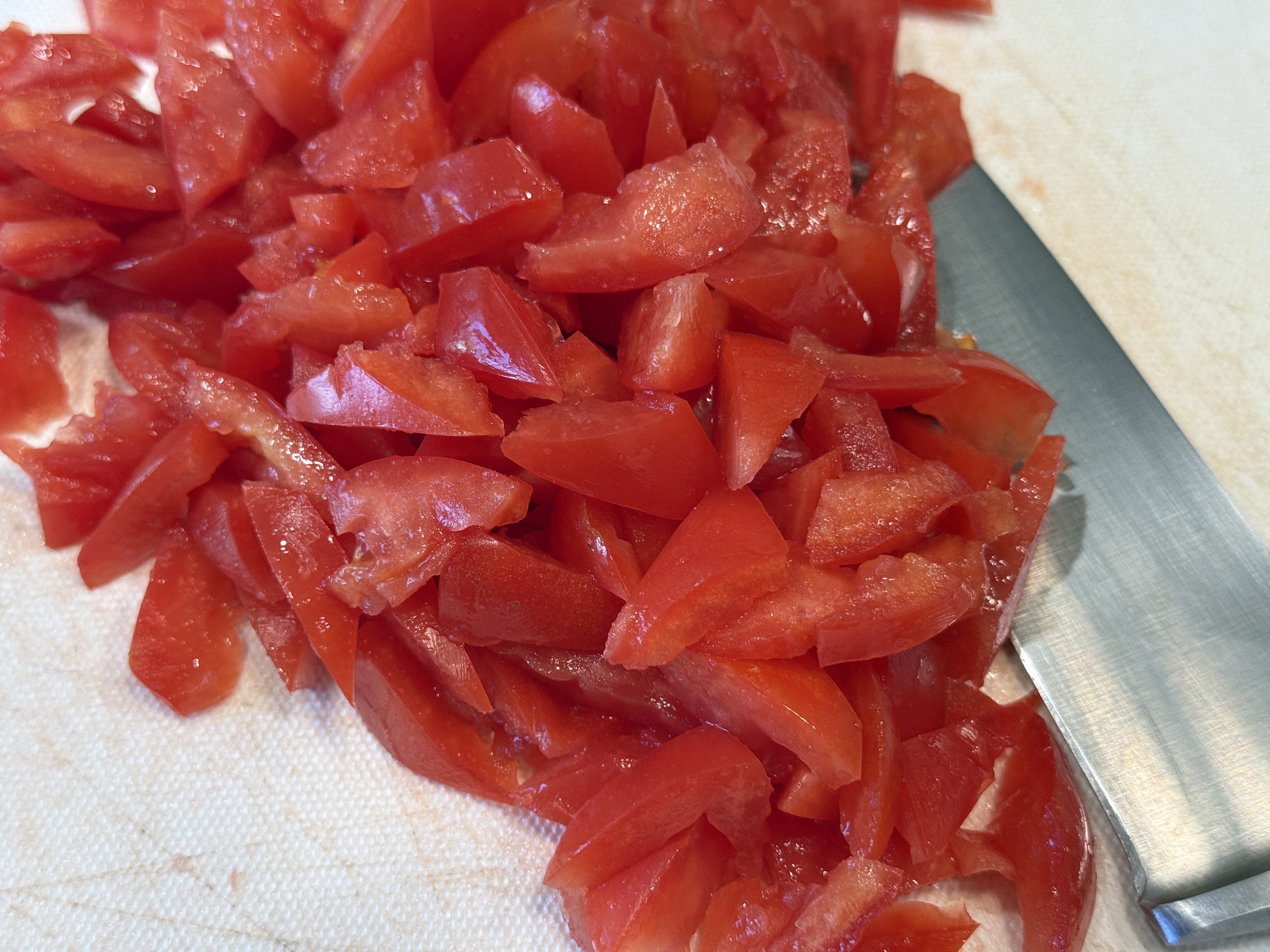
The tomatoes diced and ready for salting.

Rinse the tomatoes and cut them into quarters, or halves if using cherry tomatoes. Remove as much of the seeds and watery interior as possible. Dice the tomato flesh into roughly 1/4-inch pieces. An easy way to do this is to start at one point of each tomato piece, slice off a small amount, rotate the tomato, and repeat until the entire piece is diced.
02

Salt & Drain the Tomatoes

Salt & Drain the Tomatoes
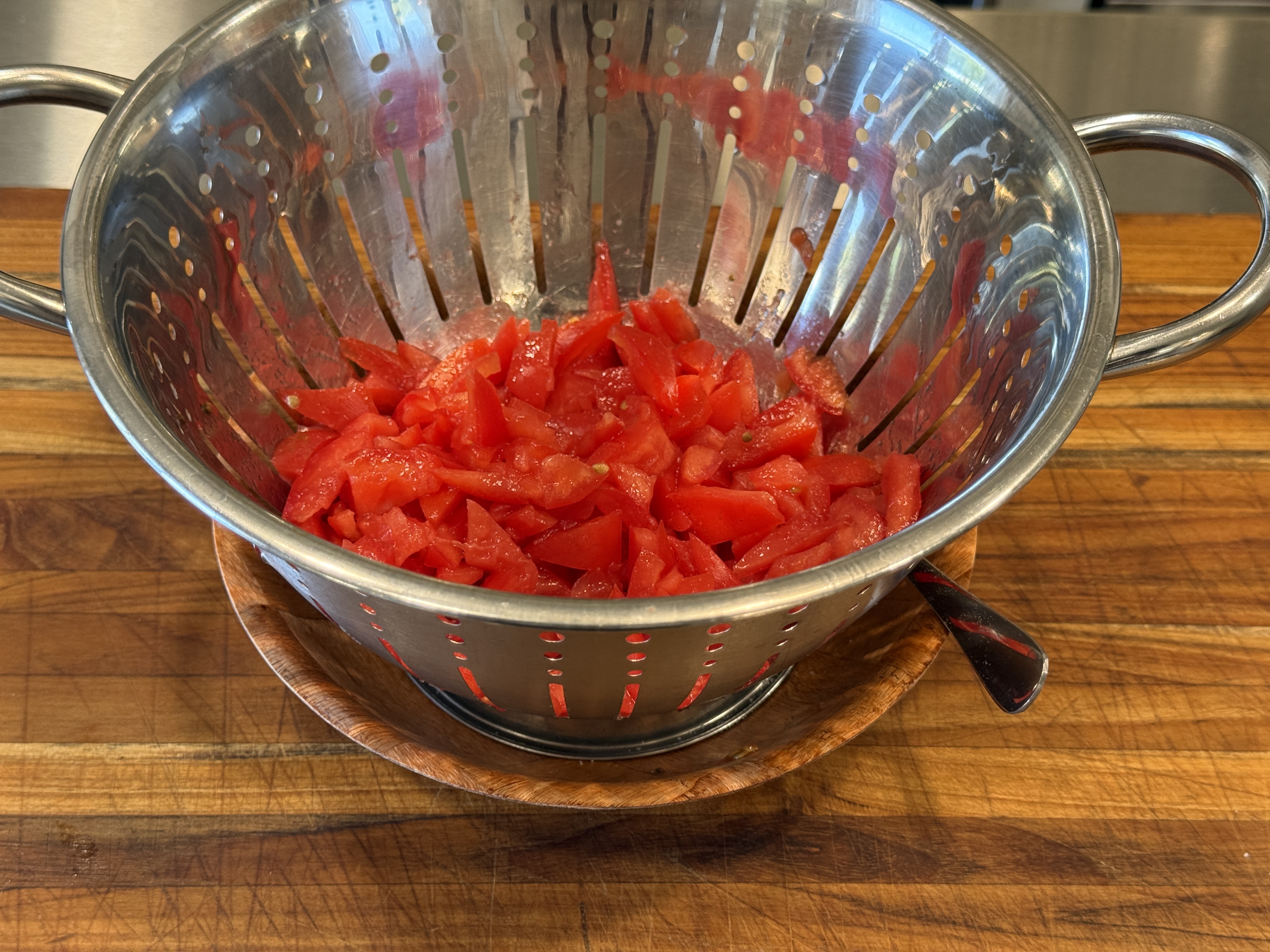
Salted tomatoes draining over a bowl.
Gently toss the diced tomatoes with kosher salt before draining.
After draining, you can see how much excess water the salt has drawn from the tomatoes.

Place the diced tomatoes in a stainless-steel or plastic colander (see note) set over a bowl and sprinkle evenly with 1 teaspoon kosher salt. Gently stir the tomatoes so the salt is evenly distributed. Loosely cover the colander and allow the tomatoes to drain for 3 hours. Once per hour, gently stir the tomatoes and discard the liquid that has collected in the bowl.

03

Make the Garlic-Infused Oil

This can be done at any time while the tomatoes are draining.

Make the Garlic-Infused Oil
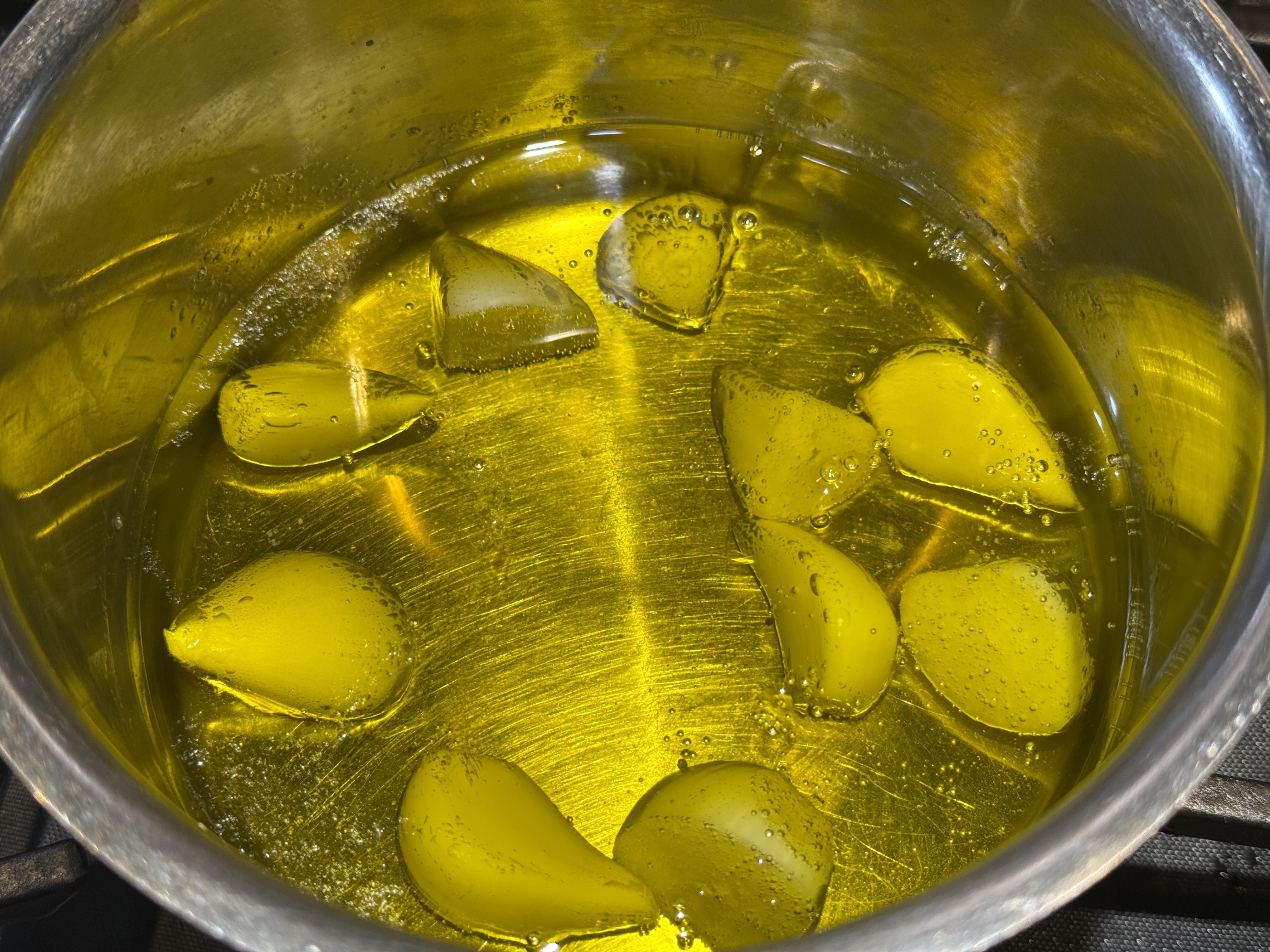
Garlic gently cooking in olive oil.
Keep the heat low so the garlic slowly cooks while infusing the olive oil.

Place the peeled garlic cloves in a small saucepan and add enough olive oil to completely cover them. Set over low heat and warm gently until you see just a few small bubbles forming around the garlic. Keep the heat low—we are slowly cooking the garlic and infusing the oil, not frying it (see note). Cook for 30–40 minutes, or until the garlic is completely tender.

04

Prepare the Bread

Prepare the Bread
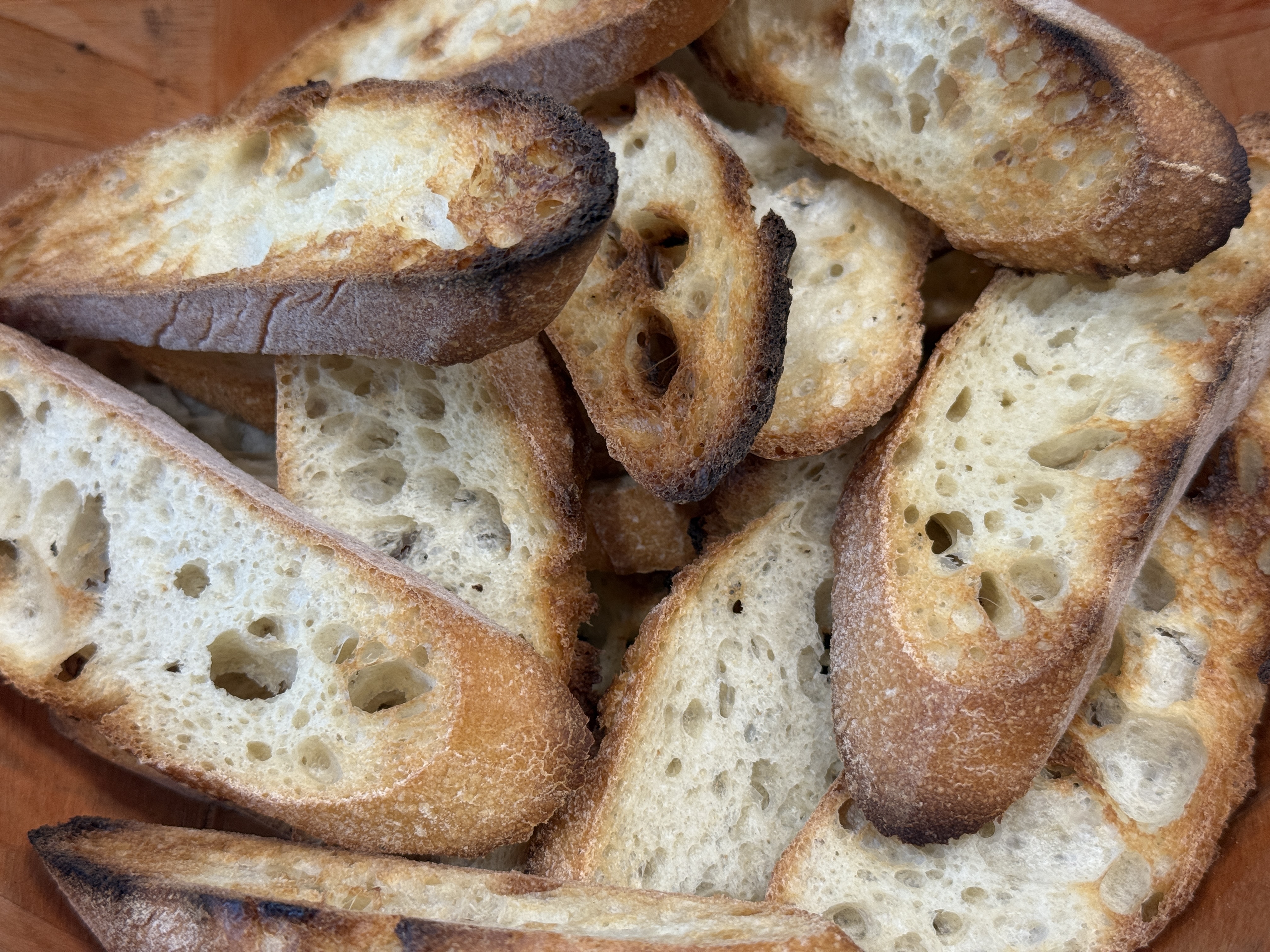
Thin baguette slices toasted until crisp and browned.

Slice the baguette (see note) thinly on an angle to create long, elongated slices. Toast until crisp and nicely browned around the edges.

05

Chiffonade the Basil

Chiffonade the Basil
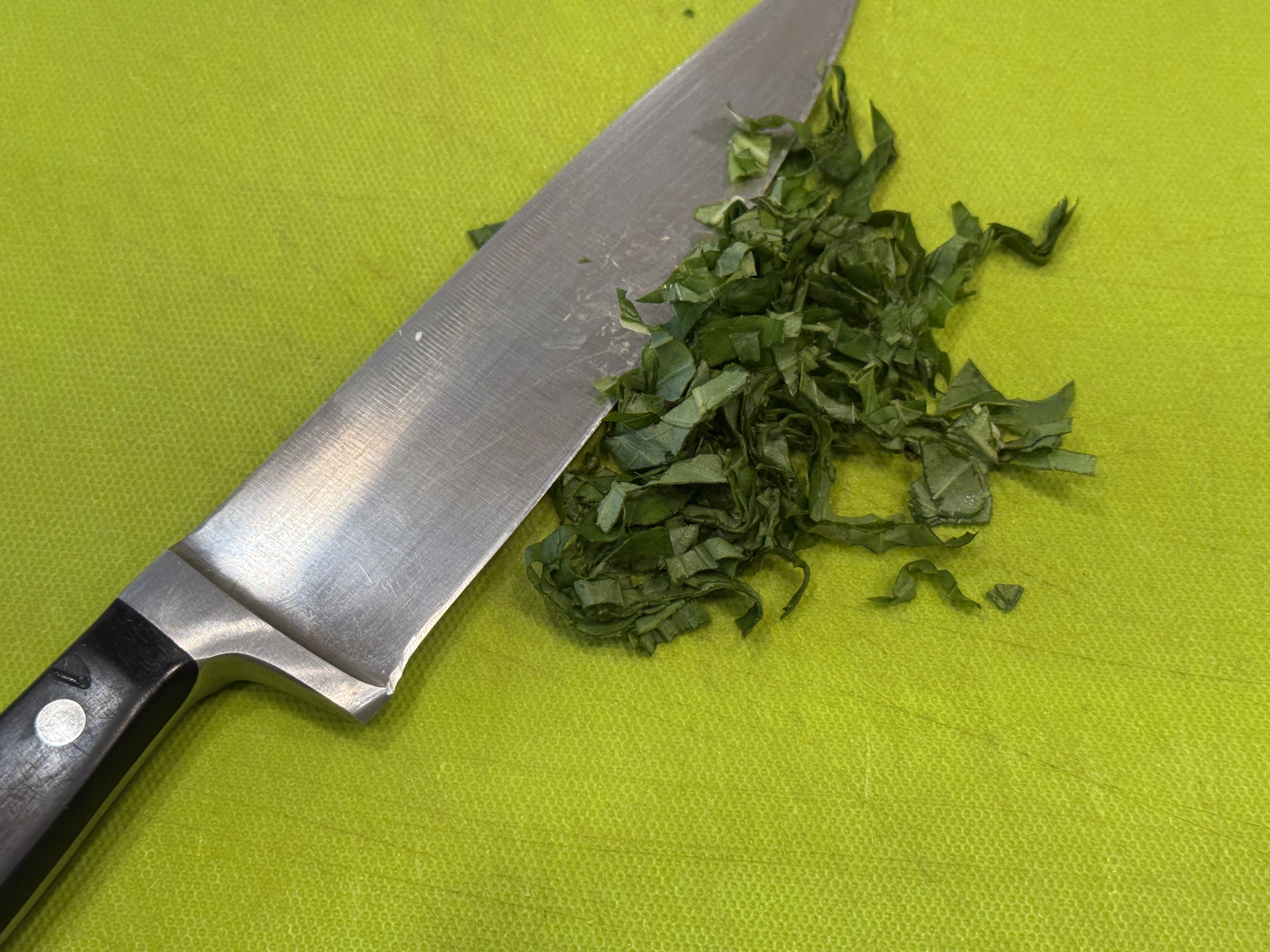
Fresh basil cut into thin ribbons.
Roll the basil leaves tightly and slice crosswise into very thin ribbons.

Stack the rinsed and thoroughly dried basil leaves, then roll them tightly lengthwise into a cigar shape. Using a very sharp knife (see note), slice the roll crosswise into very thin ribbons. Let the ribbons unfurl, then give the pile a few additional cuts so there are not any excessively long pieces.

06

Assemble the Bruschetta

Assemble the Bruschetta
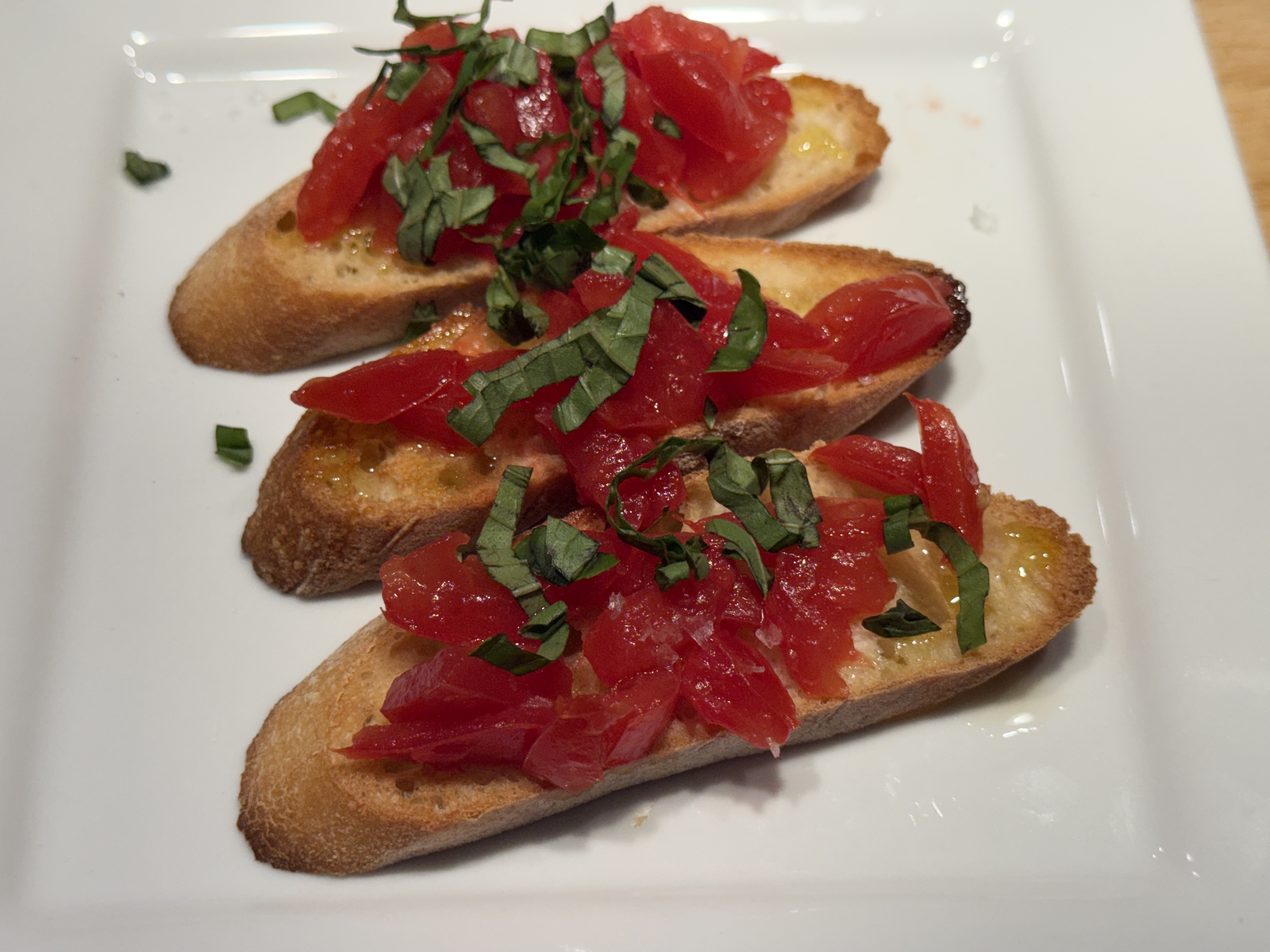
Finished bruschetta ready to serve.
Assemble the bruschetta with tomatoes, garlic-infused olive oil, crunchy sea salt and basil.

Pile the tomatoes generously onto each piece of toasted bread. Drizzle with a healthy dose of the garlic-infused olive oil, sprinkle with good crunchy sea salt, such as Maldon, and top with a little of the chiffonade basil. Serve immediately.

Bruschetta

Recipe Notes

About the Bread

In Italy, bruschetta is served on all sorts of bread. For this version, I love a crusty baguette sliced thinly on an angle. It gives you elongated pieces with plenty of crisp surface area for the tomatoes, garlic-infused oil, basil and crunchy salt.

Why Not Aluminum?

Tomatoes are acidic. Extended contact with reactive aluminum can potentially give the tomatoes a metallic taste and affect their color. Use a stainless-steel or plastic colander instead.

Gentle Garlic

The goal of slowly cooking the garlic is not just tender garlic—we are infusing the olive oil. That gives the finished bruschetta plenty of garlic flavor without the harsh bite that raw garlic can bring.

Use a Sharp Knife for Basil

Basil bruises very easily. A dull knife crushes the leaves rather than cutting cleanly through them, which can cause the cut edges to darken and turn black. Chiffonade is simply a fancy way of cutting basil into thin ribbons, so you get basil in every bite without feeling like you are eating a leaf.