Recipe

Italian Beef Braciole

Tender beef rolls filled with garlic, parsley, Parmigiano-Reggiano, breadcrumbs, and prosciutto, then slowly braised in Sunday tomato sauce.

Serves 8–10 About 5 hours Italian comfort food
Slow-braised Italian classic

Impressive, comforting, and easier than it looks.

Braciole is one of those dishes that looks complicated until you roll your first one.

Thin slices of beef are pounded until even, layered with a simple garlic-parsley paste, fresh breadcrumbs, Parmigiano-Reggiano, and prosciutto, then tied and browned before simmering for hours in tomato sauce.

The slow braise makes the beef fork tender and leaves you with a rich sauce that is perfect over pasta or served simply with crusty Italian bread.

Method

How to make braciole

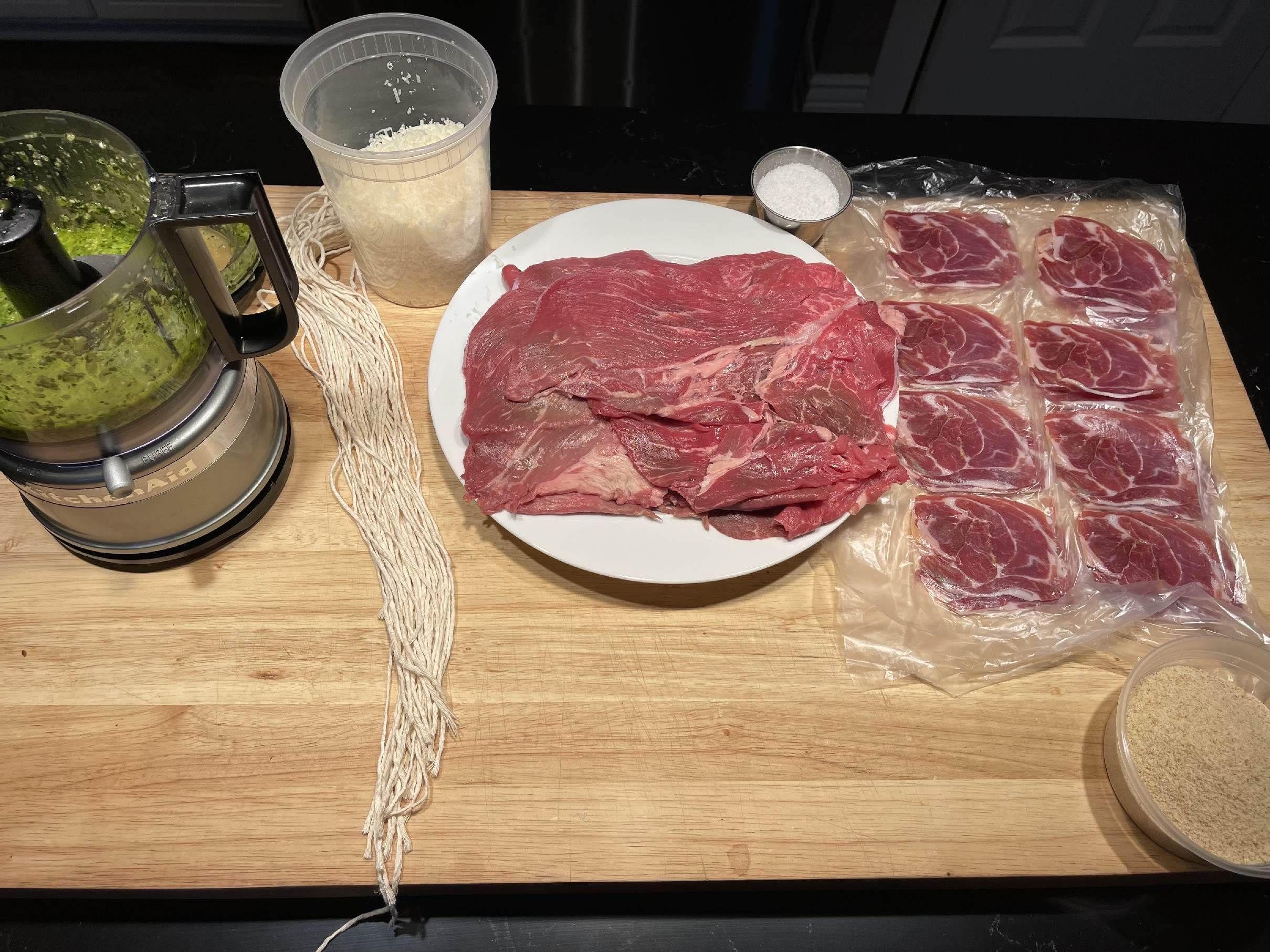
  1. Prepare the beef. Cut open a gallon freezer bag along the sides. Working one piece at a time, place the flank steak between the plastic and pound until evenly thin throughout. Even thickness is more important than making the meat paper thin.
  2. Make the garlic-parsley paste. Combine the garlic, parsley leaves, and olive oil in a food processor or blender. Process until smooth and evenly blended.
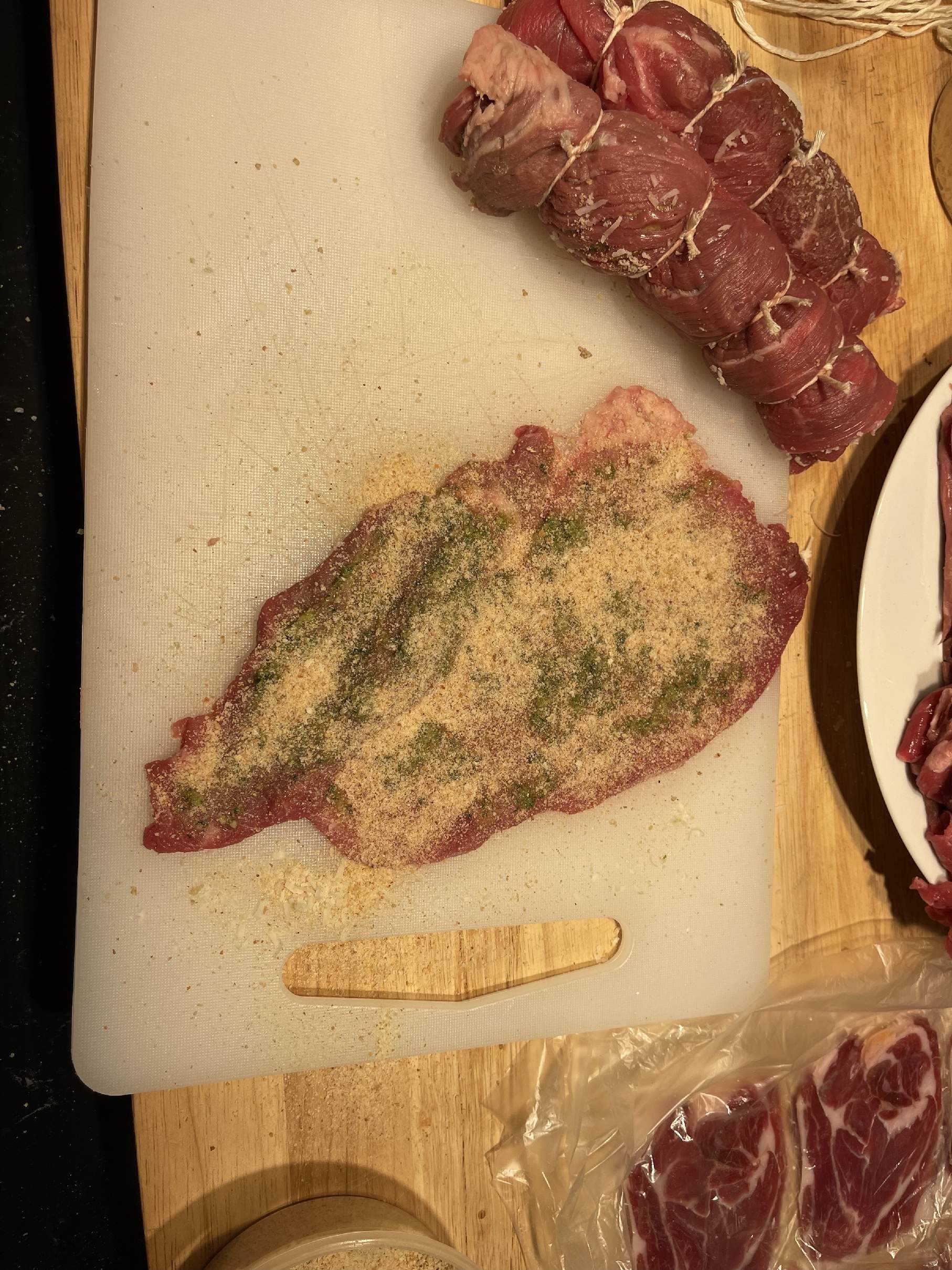
  3. Season and spread. Lay a piece of beef flat on your work surface. Season lightly with salt and pepper, then spread a thin, even layer of the garlic-parsley paste over the surface.
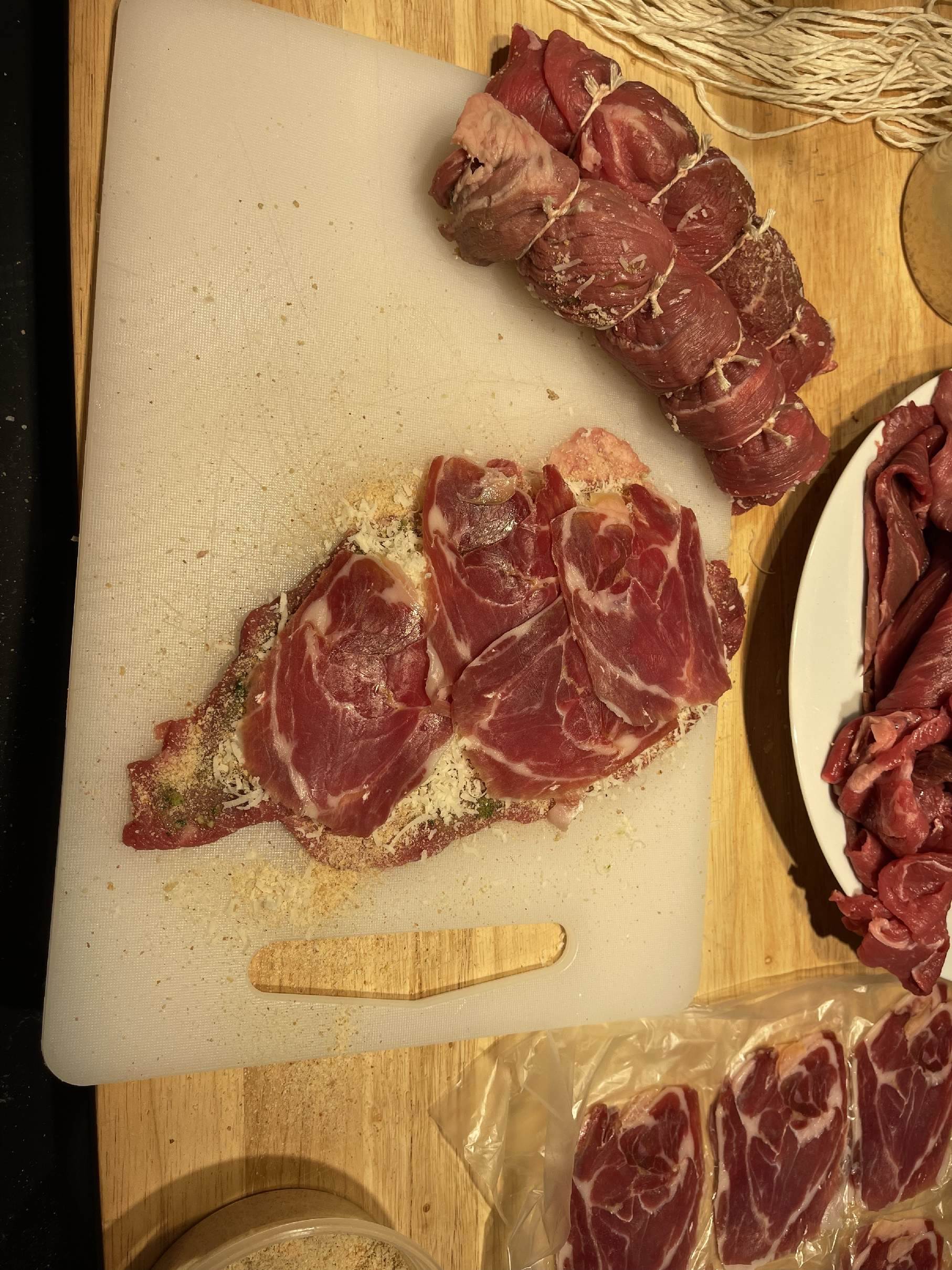
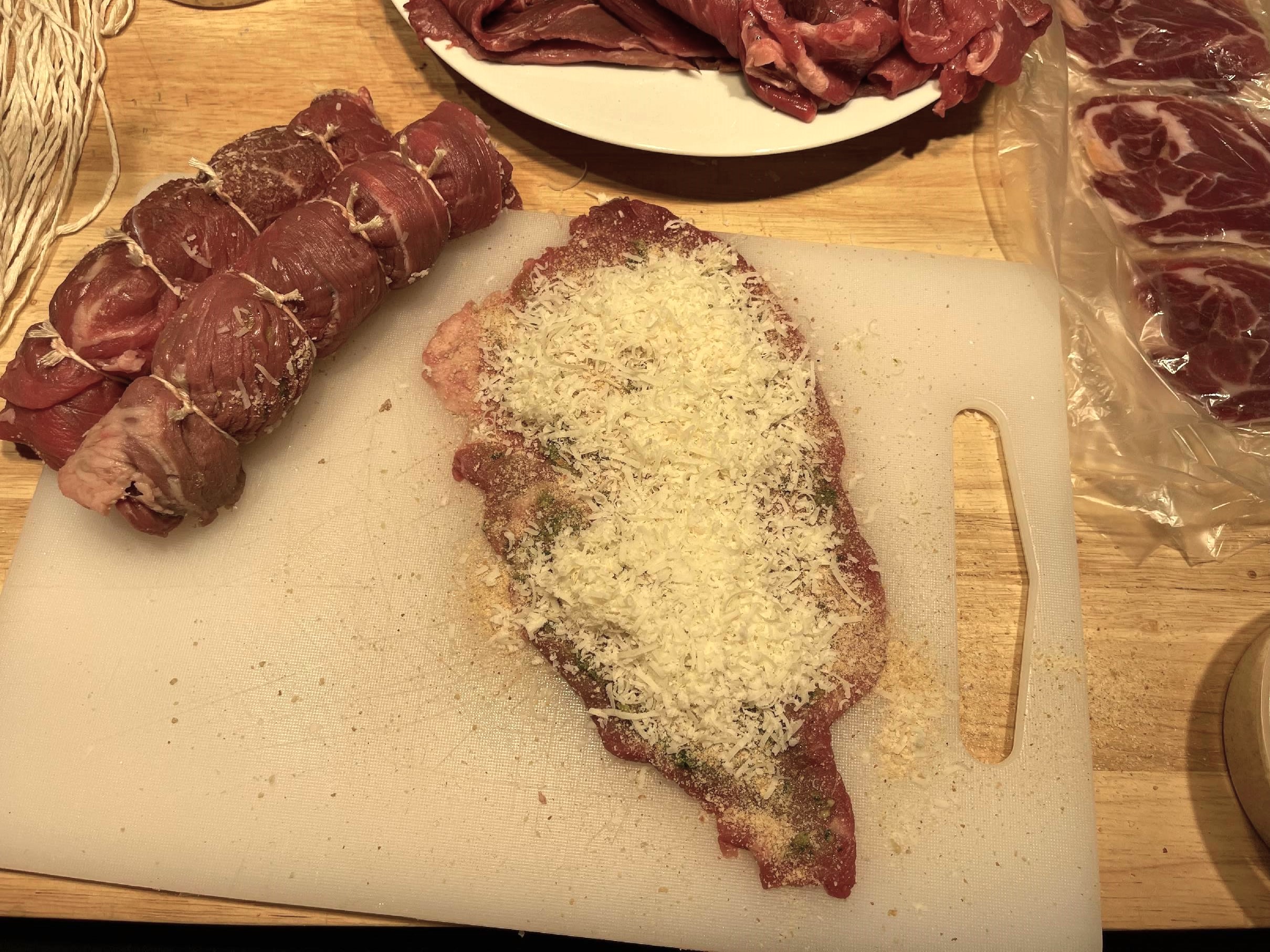
  4. Add the filling. Sprinkle on a light layer of fresh breadcrumbs, followed by a generous handful of Parmigiano-Reggiano. Top with slices of prosciutto, covering most of the surface without overlapping too heavily.
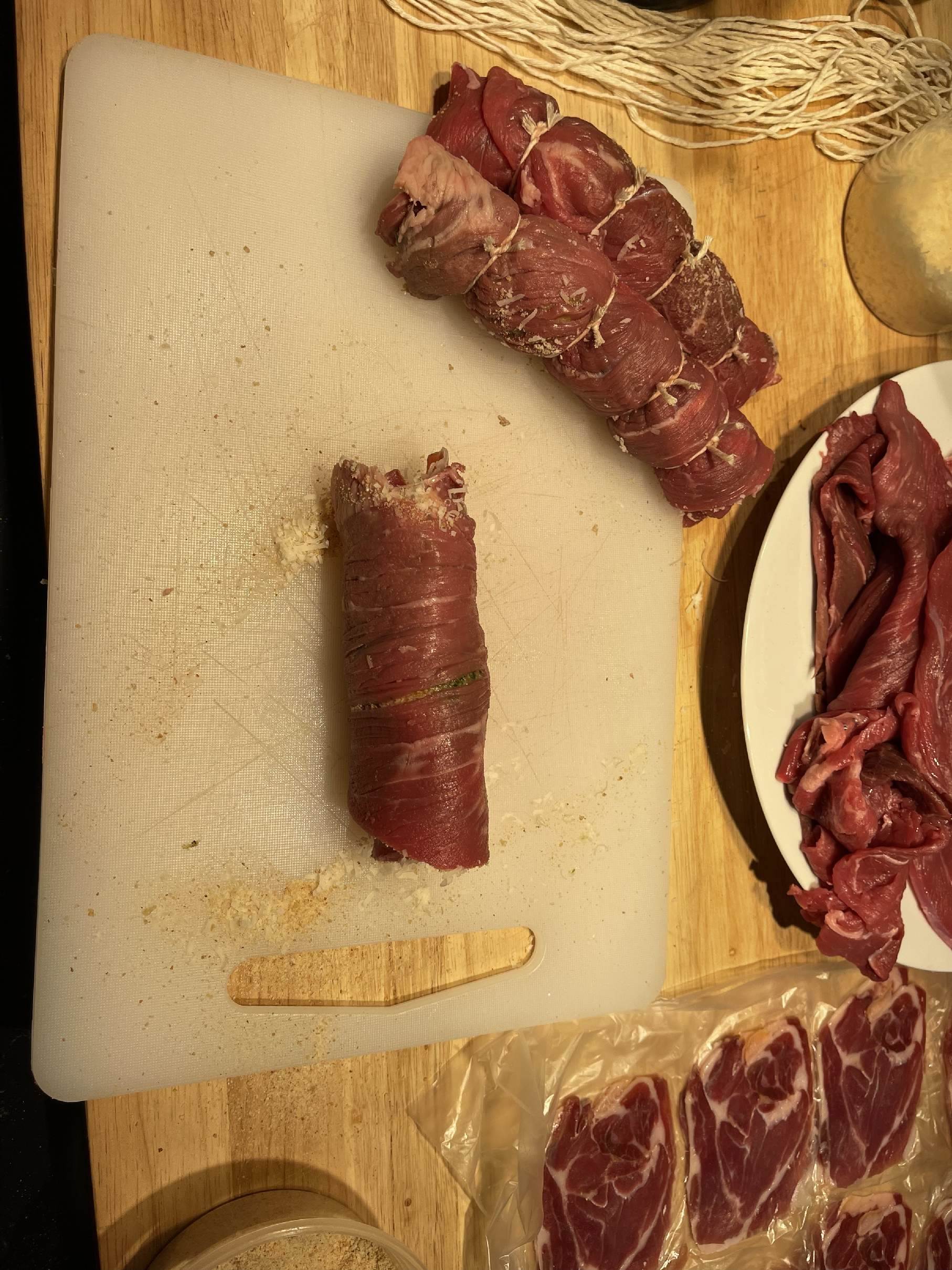
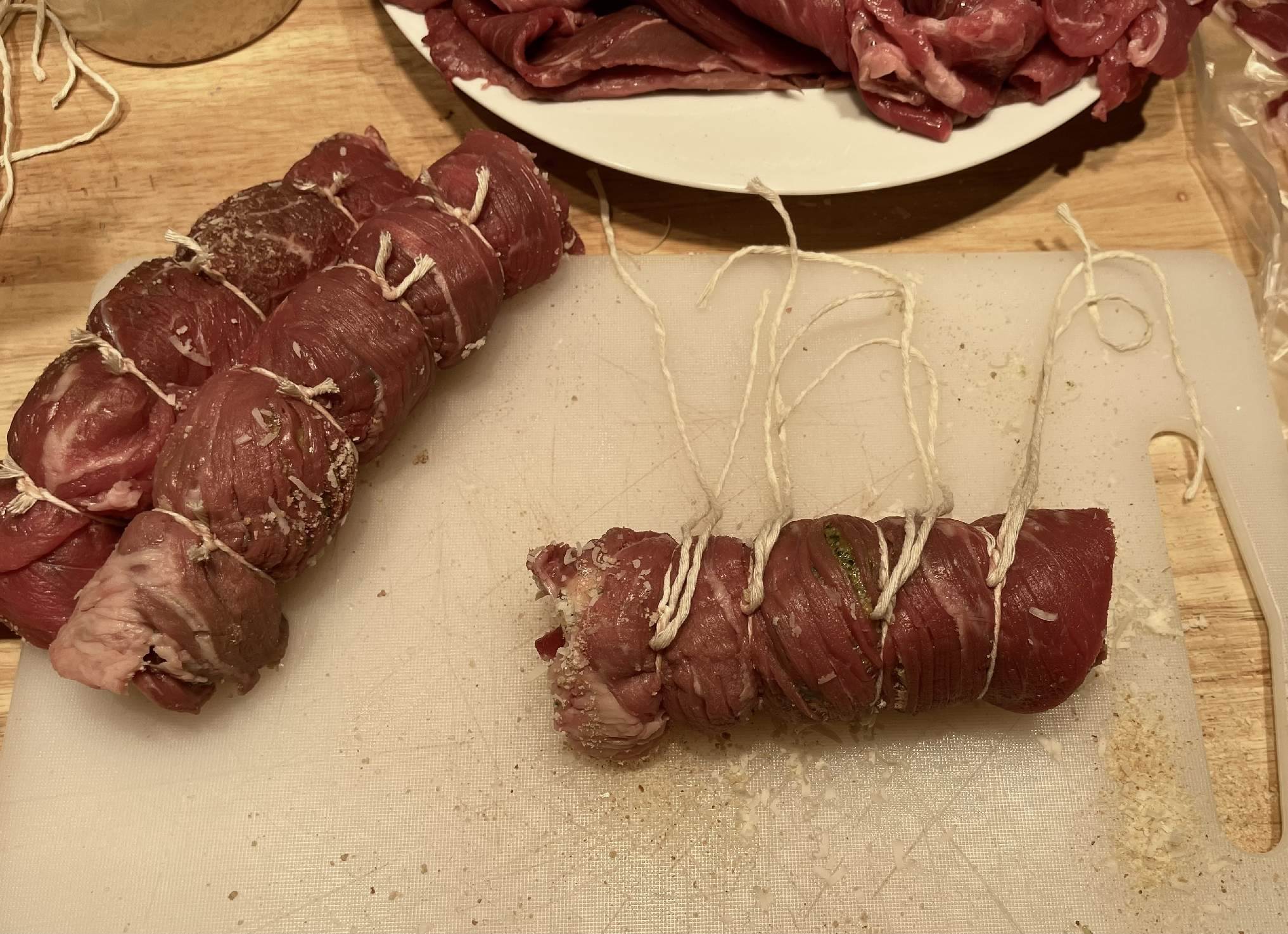
  5. Roll. Starting from the narrow end, roll the beef tightly into a cylinder. Do not overfill the braciole; tighter rolls hold together better while braising.
  6. Tie. Use butcher’s twine to secure each roll, leaving roughly one inch between each loop. Trim away any excess twine.
  7. Brown in batches. Heat a Dutch oven or heavy-bottomed stainless steel pot over medium-high heat. Add 1 tablespoon of canola oil. Working in batches, brown the braciole on all sides, adding more oil as needed. Transfer the browned braciole to a plate.
  8. Deglaze. Reduce the heat to medium-low and pour in the red wine. Use a wooden spoon to scrape the browned bits from the bottom of the pot until they dissolve into the wine.
  9. Build the sauce. Add the whole peeled tomatoes, crushing them gently with a spoon or by hand. Stir in the tomato passata and whole garlic cloves. Season lightly with salt and pepper.
  10. Braise low and slow. Return the browned braciole to the sauce and bring to a gentle simmer. Reduce the heat to low and cook uncovered until fork tender, about 3½–4 hours. Stir occasionally so the sauce does not stick to the bottom of the pot.
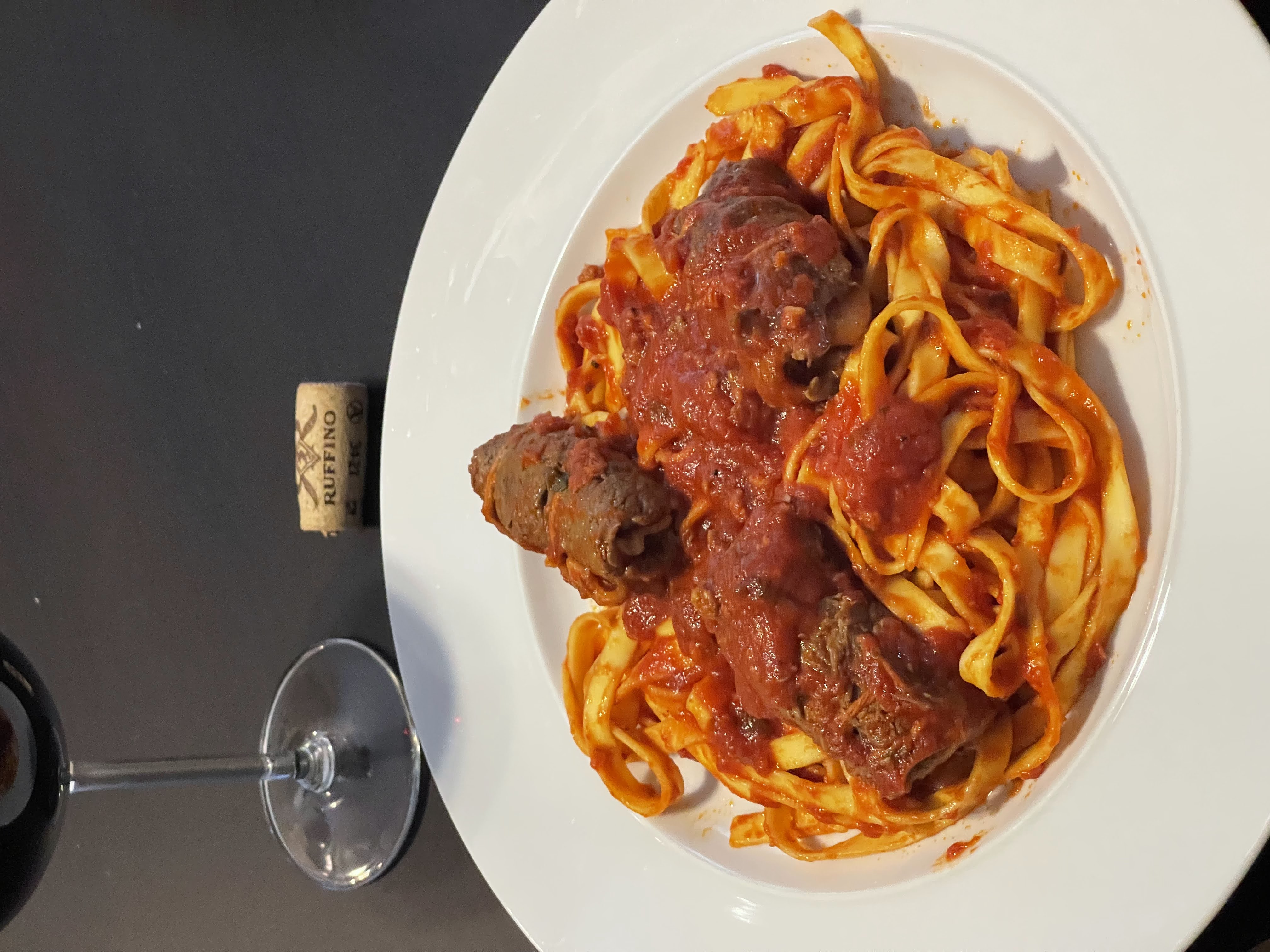
  11. Rest and serve. Let the braciole rest for about 10 minutes. Remove the butcher’s twine, then serve whole with crusty bread or slice into thick rounds and serve over pasta with plenty of sauce.
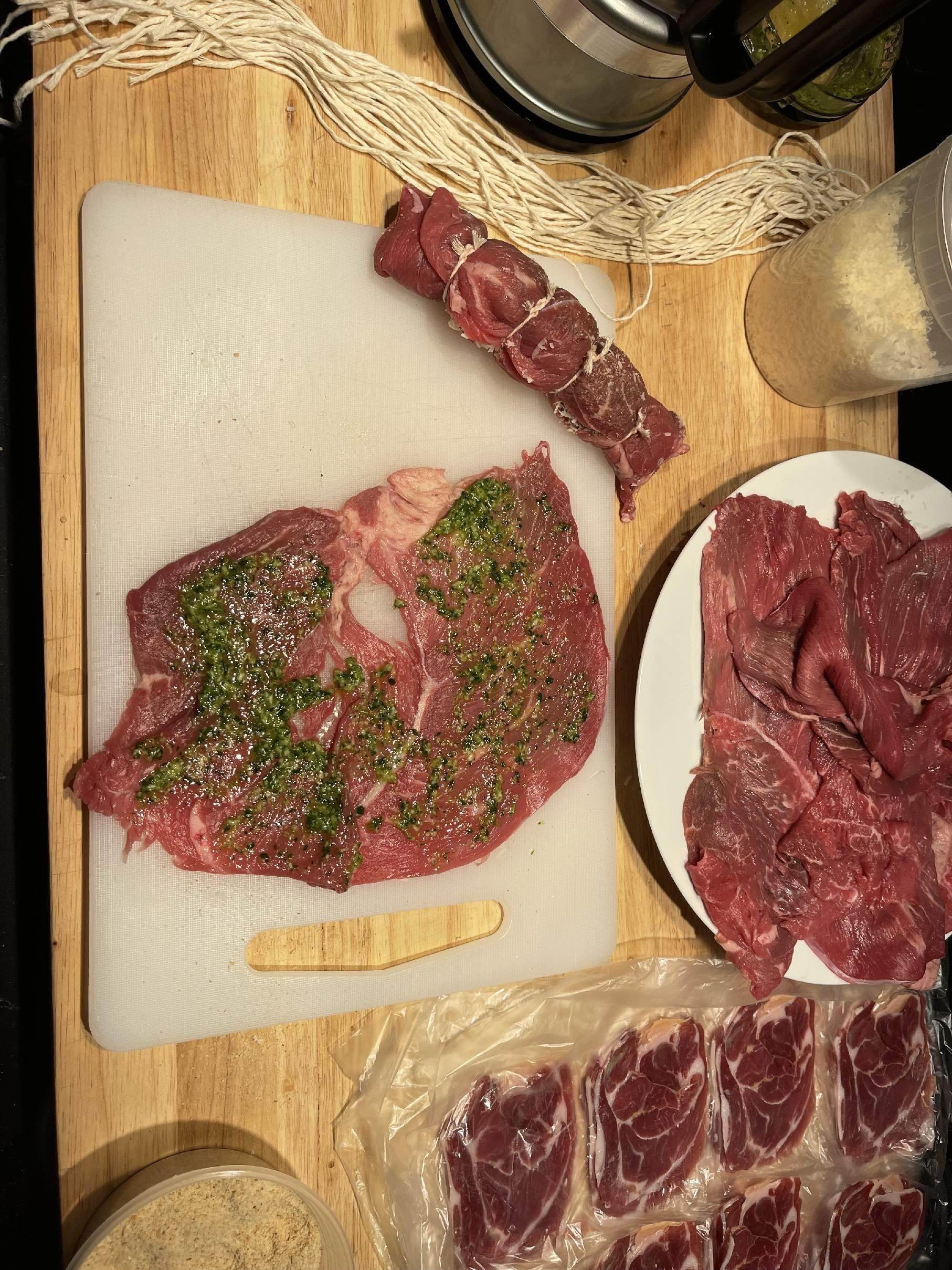
Step-by-step assembly

Rolling and tying the braciole.

Paul’s tips

Make it better, make it ahead.

My mother and grandmother always used toothpicks, but I prefer butcher’s twine. It keeps the rolls secure even after hours of simmering and regular stirring.

  • Never use aluminum cookware: tomatoes are acidic and can react with aluminum, which may give the sauce a metallic taste.
  • Brown in batches: crowding the pot traps moisture and causes the meat to steam instead of brown.
  • Keep the simmer gentle: the sauce should barely bubble so the beef has time to become tender without toughening.
  • Make it ahead: braciole tastes even better the next day after the sauce and filling have had time to settle.
  • Freeze it in sauce: cool completely, freeze with sauce for up to 3 months, and reheat gently on the stovetop.
FAQ

Common braciole questions

Can I make braciole ahead of time?

Yes. Braciole is an excellent make-ahead dish and often tastes better the next day.

Can I freeze braciole?

Yes. Freeze the cooked braciole in sauce for up to 3 months. Thaw overnight in the refrigerator before reheating gently.

What cut of beef is best for braciole?

Thinly sliced flank steak works well because it becomes tender during the long braise while still holding together when rolled.

Can I use toothpicks instead of butcher’s twine?

Yes. Toothpicks are traditional in many families, but twine keeps the rolls more secure during a long simmer.

Cook with me

Want to learn this dish hands-on?

Braciole is a perfect class dish because it teaches pounding, filling, rolling, tying, browning, and slow braising. Ask about adding it to a private cooking class in Plainfield, Naperville, or the surrounding Chicago suburbs.

View Cooking Classes